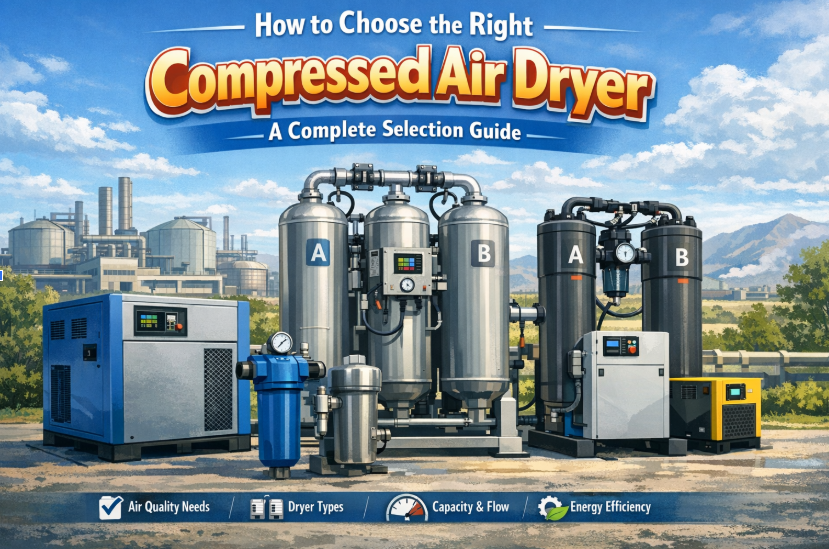

Compressed air systems are essential in many industries, from manufacturing to automotive services. However, the performance of these systems heavily depends on the quality of air delivered. Moisture in compressed air can cause corrosion, damage tools, and reduce efficiency. This makes selecting the right compressed air dryer crucial. Understanding how to select a compressed air dryer is the first step toward ensuring your system operates smoothly and efficiently.
Understanding Compressed Air Dryers
A compressed air dryer is a device designed to remove moisture from compressed air before it reaches your tools, machinery, or storage tanks. The presence of water in compressed air can lead to rust, contamination, and costly downtime. Dryers come in various types, each suited to specific applications. Familiarizing yourself with these types is essential for making an informed choice.
Key Types of Compressed Air Dryers
There are several types of compressed air dryers, and each has its advantages and limitations. Knowing the differences will help you decide which one meets your needs.
Refrigerated Air Dryers
Refrigerated air dryers cool compressed air to remove moisture. They are widely used in industrial and commercial applications due to their cost-effectiveness and reliability. These dryers typically reduce air temperature to around 35–50°F, condensing water vapor into liquid form that is then removed. Refrigerated dryers are ideal for general-purpose applications but may not be suitable for extremely low dew point requirements.
Desiccant Air Dryers
Desiccant air dryers use a moisture-absorbing material to achieve very low dew points. These dryers are perfect for applications requiring extremely dry air, such as in pharmaceutical or electronics manufacturing. They are more expensive than refrigerated dryers and require periodic maintenance to replace or regenerate the desiccant material. Understanding how to select a compressed air dryer includes evaluating the dew point requirements of your system.
Membrane Air Dryers
Membrane dryers use a semi-permeable material that allows water vapor to pass through while retaining compressed air. They are compact, energy-efficient, and suitable for smaller systems or point-of-use applications. However, membrane dryers may not be appropriate for high-flow systems or environments with fluctuating air temperatures.
Hybrid Dryers
Hybrid dryers combine features of refrigerated and desiccant dryers to provide efficient moisture removal while minimizing energy consumption. They are a versatile option for facilities with varying operational demands.
Factors to Consider When Choosing a Compressed Air Dryer
Selecting the right compressed air dryer involves more than just picking a type. Several factors should guide your decision to ensure optimal performance and cost-effectiveness.
Dew Point Requirements
The dew point is the temperature at which moisture condenses from compressed air. Different applications require different dew points. For instance, food processing or pharmaceutical industries often require extremely low dew points, while general manufacturing may tolerate higher levels. Knowing your system’s dew point requirements helps determine the type of dryer needed.
Airflow Capacity
Compressed air dryers are rated by the amount of air they can process, typically measured in cubic feet per minute (CFM) or liters per second (L/s). To avoid bottlenecks, choose a dryer that can handle your system’s maximum airflow. Undersized dryers can reduce system efficiency and increase maintenance issues.
Pressure Considerations
The operating pressure of your compressed air system impacts dryer performance. Some dryers are optimized for high-pressure applications, while others perform best at standard pressures. Ensuring compatibility with your system pressure is critical to prevent damage and ensure consistent air quality.
Ambient Conditions
Environmental factors such as temperature, humidity, and dust levels affect the performance of air dryers. Refrigerated dryers may struggle in extremely cold or hot environments, while desiccant dryers can be sensitive to high humidity levels. Considering the operating environment is an essential step in understanding how to select a compressed air dryer effectively.
Energy Efficiency
Energy consumption is a significant operating cost for compressed air systems. Look for dryers with energy-saving features such as heat-of-compression designs, automatic load control, or efficient cooling systems. A dryer with a higher initial cost but lower energy consumption can offer long-term savings.
Maintenance and Reliability
Ease of maintenance and long-term reliability should be a priority. Regular maintenance, including filter replacement and desiccant regeneration, ensures the dryer continues to operate effectively. Choosing a reputable brand with a proven track record can reduce downtime and prevent costly repairs.
Space and Installation Requirements
The physical size of the dryer and installation requirements are also crucial considerations. Some systems, like membrane dryers, are compact and ideal for limited spaces, while larger desiccant or refrigerated dryers may require dedicated floor space and specific installation conditions. Plan for accessibility and serviceability to make maintenance easier.
See also: How Quantum Computing Will Revolutionize the Tech Industry
Step-by-Step Guide to Selecting the Right Dryer
Knowing the factors is only part of the process. Following a structured approach can help you make the right decision efficiently.
- Assess Your Air Quality Needs
Determine the required dew point and air purity levels for your application. - Calculate Airflow Requirements
Measure the maximum and average airflow of your system to size the dryer correctly. - Evaluate Environmental Conditions
Consider temperature, humidity, and dust levels at your facility to identify the most suitable dryer type. - Compare Dryer Types
Match the features of refrigerated, desiccant, membrane, and hybrid dryers to your system needs. - Consider Total Cost of Ownership
Factor in initial cost, energy consumption, maintenance, and expected lifespan. - Check Manufacturer Support
Opt for brands that provide comprehensive support, spare parts, and warranty coverage.
Common Mistakes to Avoid
Even experienced operators sometimes make errors when selecting a compressed air dryer. Avoiding these pitfalls ensures optimal performance and prevents unnecessary expenses.
- Ignoring Dew Point Requirements
Choosing a dryer without considering the dew point can lead to moisture-related problems in sensitive applications. - Undersizing the Dryer
A dryer that cannot handle your system’s airflow will compromise efficiency and increase maintenance issues. - Overlooking Maintenance Needs
Selecting a high-performance dryer without considering service requirements can result in unexpected downtime. - Neglecting Energy Efficiency
Focusing solely on initial cost may lead to higher long-term energy expenses.
Ensuring Long-Term Performance
Selecting a compressed air dryer is not just about immediate needs. Consider the future growth of your system, potential process changes, and scalability. Regular monitoring, preventive maintenance, and proper installation are key to sustaining performance. Investing in a high-quality dryer and understanding how to select a compressed air dryer ensures reliability for years to come.
Making Your Choice Confidently
Choosing the right compressed air dryer is a critical step in maintaining an efficient and reliable air system. By understanding the different types of dryers, considering operational and environmental factors, and following a structured selection process, you can make an informed decision. Remember that the right choice balances performance, energy efficiency, maintenance requirements, and cost-effectiveness. Approaching the selection process with knowledge and care guarantees better air quality, reduced downtime, and long-term savings.


 By
By




 By
By