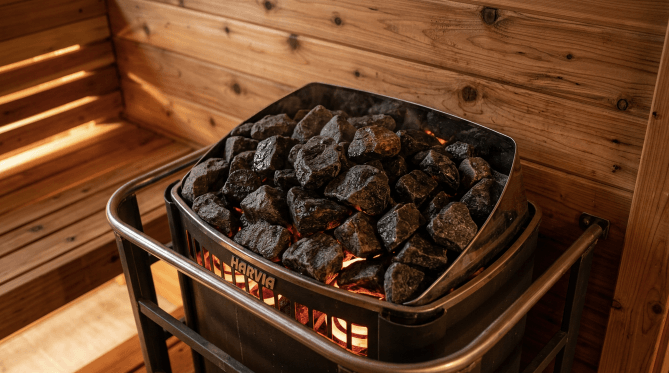

A sauna heater needs a floor surface rated to handle sustained heat near its base, which rules out carpet and most vinyl. A wood deck works fine with a heat-resistant pad or tile under and around the heater, a concrete slab works without any special treatment, and compacted, leveled gravel is a common and effective base for freestanding outdoor cabins. The right choice depends on whether you’re placing the heater inside an existing structure, on a new deck, or building a standalone outdoor cabin from scratch.
What Floor Materials Actually Handle Sauna Heat Safely?
Concrete, ceramic or porcelain tile, and heat-treated stone all handle the temperatures near a heater base without issue. Solid wood decking is generally fine too, since sauna heaters are engineered with floor clearance in mind, but manufacturers typically still recommend a heat-resistant pad directly under and around the unit as a buffer, especially for older decking with any gaps or exposed end grain. Carpet, laminate, and standard vinyl flooring are not appropriate anywhere near the heater zone; they can discolor, soften, or in worse cases scorch under prolonged heat exposure, even outside the heater’s direct clearance radius.
What Clearance Does the Heater Actually Need From the Floor?
Every heater model specifies its own floor and wall clearances in the installation manual, and this isn’t a number to guess at. Many residential units call for a few inches of open space beneath the unit and a larger clearance, often 6 to 8 inches or more, from any combustible wall surface behind or beside it. A guard rail around the heater is standard and helps enforce that clearance visually, but the floor material underneath still needs to tolerate radiant heat over years of use, not just the one-time installation inspection. Skipping this step is one of the more common corners cut in DIY installs, and it’s not one worth cutting given the fire risk involved.
Is a Wood Deck a Good Base for an Outdoor Cabin?
Yes, with a few conditions. The deck needs to be structurally sound and rated for the added weight of a cabin, which for a typical two- to four-person sauna can run several hundred pounds once the heater, benches, and paneling are all in place. Under the heater specifically, add a heat-resistant pad, often a simple ceramic tile square or a manufacturer-supplied base plate, even if the heater’s stated clearance technically allows bare wood. Decking also needs gaps for drainage and airflow underneath the cabin itself if it’s an outdoor unit, since trapped moisture under a sauna base accelerates wood rot regardless of how well the deck was built.
What About a Concrete Pad?
A poured concrete pad is close to the ideal base for a freestanding outdoor cabin. A standard 4-inch reinforced slab, similar to what you’d pour for a garden shed, handles the weight and heat of most residential sauna setups without any special reinforcement. Concrete also resists moisture and doesn’t need the drainage gaps a wood deck does, though you still want a slight slope, roughly a quarter inch per foot, to shed rainwater away from the cabin rather than pooling underneath it. If you’re planning a permanent outdoor installation and don’t already have a deck in place, a concrete pad is usually the lowest-maintenance option long term.
Can You Just Use Gravel?
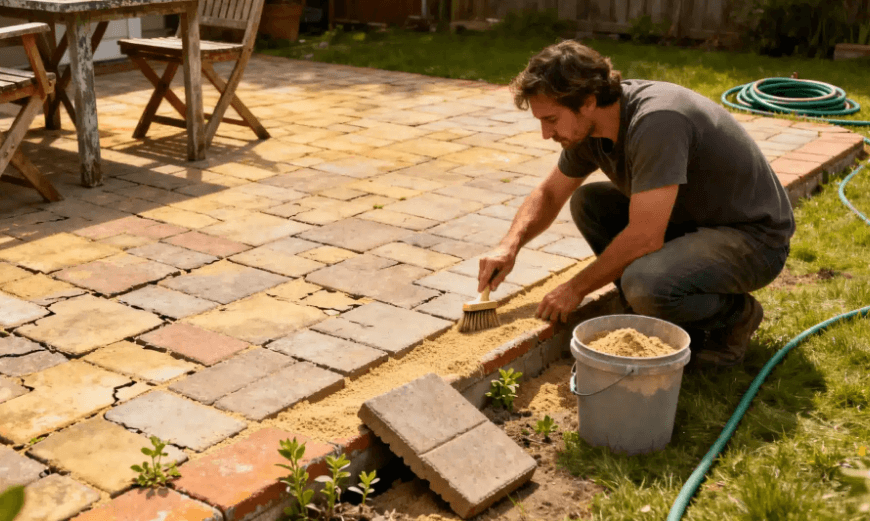
Compacted gravel over a properly prepared base is a legitimate and common choice, particularly for cabins that might be relocated later or where pouring concrete isn’t practical. The key steps are excavating a few inches down, laying a geotextile fabric to prevent weed growth and soil mixing, then compacting several inches of crushed gravel to a dead-level surface. Skip the leveling step and the cabin will settle unevenly within a season, which stresses the door frame and can cause it to stick or gap. Gravel drains well, which helps keep moisture away from the cabin’s floor sills, and it’s typically the cheapest of the three base options if you’re doing the prep work yourself.
Does Indoor Versus Outdoor Change the Answer?
Indoor installs, like a converted garage corner or a basement room, usually already have a concrete or tile floor that works without modification, so the main task is confirming clearance and adding a heat pad if the heater sits close to any wall. Outdoor installs carry the added consideration of weather and drainage, which is why gravel and concrete tend to outperform wood decking for a fully standalone cabin, even though a well-built deck with a heat pad is still a workable and common choice, especially when the cabin is being added to an existing deck rather than built from scratch.
See also: How to Buy Bus Tickets Online Using Your Phone
What Should You Check Before Placing the Heater?
Confirm the exact clearance specs from your heater’s manual, check that whatever surface you’re using is rated for sustained radiant heat, and make sure the base is level within the manufacturer’s tolerance before final assembly. If you’re still shopping for a heater and haven’t settled on the base yet, it’s worth checking floor clearance specs across a few models first, since they vary more than people expect and can affect whether SweatDecks or another supplier has a unit that fits your existing deck or pad without modification.
Frequently Asked Questions
Can a sauna heater sit directly on a wood deck? Yes, as long as the manufacturer’s floor clearance is maintained and, for freestanding cabins, a heat-resistant pad or tile is placed under and around the heater base to protect the decking.
Is gravel a good base for an outdoor sauna cabin? Gravel over a compacted, leveled base drains well and resists rot, making it a solid choice for freestanding outdoor cabins, though it needs to be perfectly level before the cabin sits on it.
Does a concrete pad need to be a specific thickness for a sauna? Most residential sauna cabins do fine on a standard 4-inch reinforced concrete slab, similar to a shed pad, unless the cabin is unusually large or heavy.
What floor clearance does a typical heater need? This varies by model, but many require at least a few inches of clearance from the floor and several inches from any combustible wall material. Always check the specific heater’s installation manual rather than assuming a standard number.
Can you install a sauna heater on carpet or vinyl flooring? No. Carpet and most vinyl flooring are not heat-rated for the temperatures near a sauna heater base and should be replaced with tile, concrete, or a heat-resistant pad in that zone.
References
- Kunutsor, S. K., et al. “Clinical Effects of Regular Dry Sauna Bathing: A Systematic Review.” Evidence-Based Complementary and Alternative Medicine, 2018. https://pubmed.ncbi.nlm.nih.gov/29849692/
- “Benefits and Risks of Sauna Bathing.” The American Journal of Medicine, 2001. https://pubmed.ncbi.nlm.nih.gov/11165553/
- Hannuksela, M. L., Ellahham, S. “Effects of Heat and Cold on Health, With Special Reference to Finnish Sauna Bathing.” American Journal of Physiology – Regulatory, Integrative and Comparative Physiology, 2018. https://pubmed.ncbi.nlm.nih.gov/29351426/
- National Fire Protection Association. https://www.nfpa.org/
By Trevor Sinclair


 By
By




 By
By