
Rain on a modern metal roof is not loud. That runs against everything most people expect, which is why a search for metal roofing Tumwater WA usually opens with a question about noise instead of a question about moss. Moss is the actual problem on this side of the Cascades, and it is the reason most of these calls happen at all. Noise is a memory of somebody’s grandfather’s barn.
Moss Returns Faster Than Shingles Are Rated
Take a north-facing slope under second-growth firs, the kind of lot that never sees direct sun between November and March. Job after job on those lots, what turns up is the same picture: a composition roof rated for thirty years, three moss treatments inside of eight, granule loss you can read from the driveway, and a homeowner holding a bid for the fourth reroof. Every cleaning carries off a little more of the mineral layer that shields the asphalt underneath. The treatment works, the shade comes back the next winter, and the moss comes with it. By the third round that roof is on borrowed time no matter what the warranty paperwork says. Nobody should be up there scrubbing it either, because a wet slope furred with moss is exactly the surface people fall off of.
Before signing anything, have the roof looked at by someone who is not bidding the replacement that same week. A July 2026 buyer’s guide from Today’s Homeowner prices a professional roof inspection between $105 and $281 nationally and recommends one every year plus another after any severe storm. That report says whether the decking is still dry and how much life the shingles honestly have left, which is the figure both bids should be argued against.
Modern Panels Are Not Old Corrugated Barn Tin
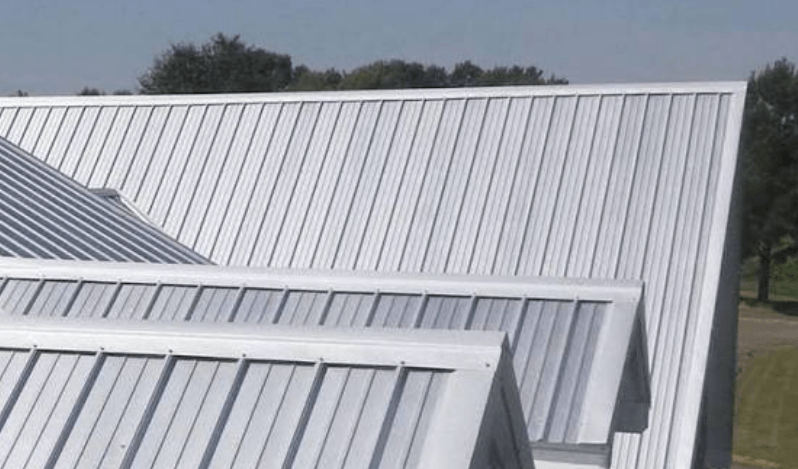
The barn tin in your memory was corrugated steel screwed straight through the face, sealed with neoprene washers that dried out and let the fasteners back off. Ten years ago that was still most of what went onto outbuildings around Thurston County, and it is what the noise story comes from: a bare panel over open purlins with nothing at all underneath it. What we form and hang now is standing seam, flat pans with the fasteners hidden inside the seam and clipped so the metal can move as it heats and cools. On a house it lands over solid decking and synthetic underlayment. That assembly is a different product wearing the same word.
The argument fits in one sentence: on a shaded slope, formed metal sheds water and gives moss nothing to root into, so a fourth composition reroof is the more expensive purchase even when its bid comes in lower. A 26-gauge standing seam panel has no granules to lose and no lap seams facing uphill. Moss can still land on it (nothing in the Pacific Northwest is truly moss-proof, and anybody who tells you otherwise is selling), but it sits on a slick painted surface and rinses down instead of matting into the seams. That is what a homeowner comparing metal roofing Tumwater WA quotes is really buying, and it is why the fabrication shop behind the quote matters as much as the crew.
Common Metal Roof Questions Homeowners Still Ask
Does a Metal Roof Sound Louder When It Rains?
Over solid decking and underlayment, most homeowners notice a difference only in hard hail. The barn comparison collapses because a barn has nothing between the panel and your ears. If a bedroom already feels loud in a storm, the insulation in that ceiling is doing more to your comfort than the roofing material will.
Will Hail or a Falling Fir Limb Dent the Panels?
Cones and small branches do not mark 26-gauge steel. A limb heavy enough to dent a steel pan would have gone through composition and into the sheathing, so the fair comparison is a dent against a hole. Cosmetic denting is a genuine risk with thin aluminum and with softer copper, which is why those do not go on tree-covered lots around here.
Is Metal Worth It on a Roof With Fifteen Years Left?
Usually not yet. If the deck is dry and the shingles still hold their granules, keep the money and re-inspect next year. The math flips once a reroof is being priced anyway, because at that point the comparison is one metal installation against two more composition ones.
See also: How to Buy Bus Tickets Online Using Your Phone
The Questions That Separate Two Metal Bids
Two metal bids on the same house can differ by thousands, and the steel itself is almost never the reason. It is gauge, coating, panel profile, and who fabricates the flashing at the chimney and the valleys. Ask these and listen for whether the answers arrive with numbers attached.
- What gauge and what coating are you quoting? A good answer names 24 or 26 gauge and a specific paint system, not just painted steel.
- Are the panels formed in your own shop or ordered cut to length? A local roll former can run a panel to the measured length of the slope with no lap seam in the middle.
- Who fabricates and installs the flashing at the chimney, the valleys and the pipe boots? Leaks start at penetrations, so the answer should be a named crew rather than a subcontractor to be sorted out later.
- What does the warranty cover separately for the paint finish, the panel and your labor? Three different terms should come back, each with years attached.
- Can I look at a standing seam roof you installed at least five winters ago on a shaded lot?
A household on that north slope is not choosing between two roofing materials. The choice is between paying for the same moss problem a fourth time and paying once for a surface it cannot get into. Get the inspection first, get both bids in writing with the gauge printed on the page, and judge them on cost per year rather than the number on signing day.

 By
By


 By
By