
Gone are the days when straightening teeth meant relying entirely on plaster moulds and hoping for the best. Modern orthodontics has embraced digital precision. Today, professionals use 3D planning to map out treatments for both braces and clear aligners. This technology gives you a sneak peek at your future smile before treatment even begins.
But how are these digital predictions actually made? And do they accurately reflect the physical reality of tooth movement? We will explore exactly how 3D planning works, its benefits, and the limitations of virtual simulations.
What Is 3D Orthodontic Planning?
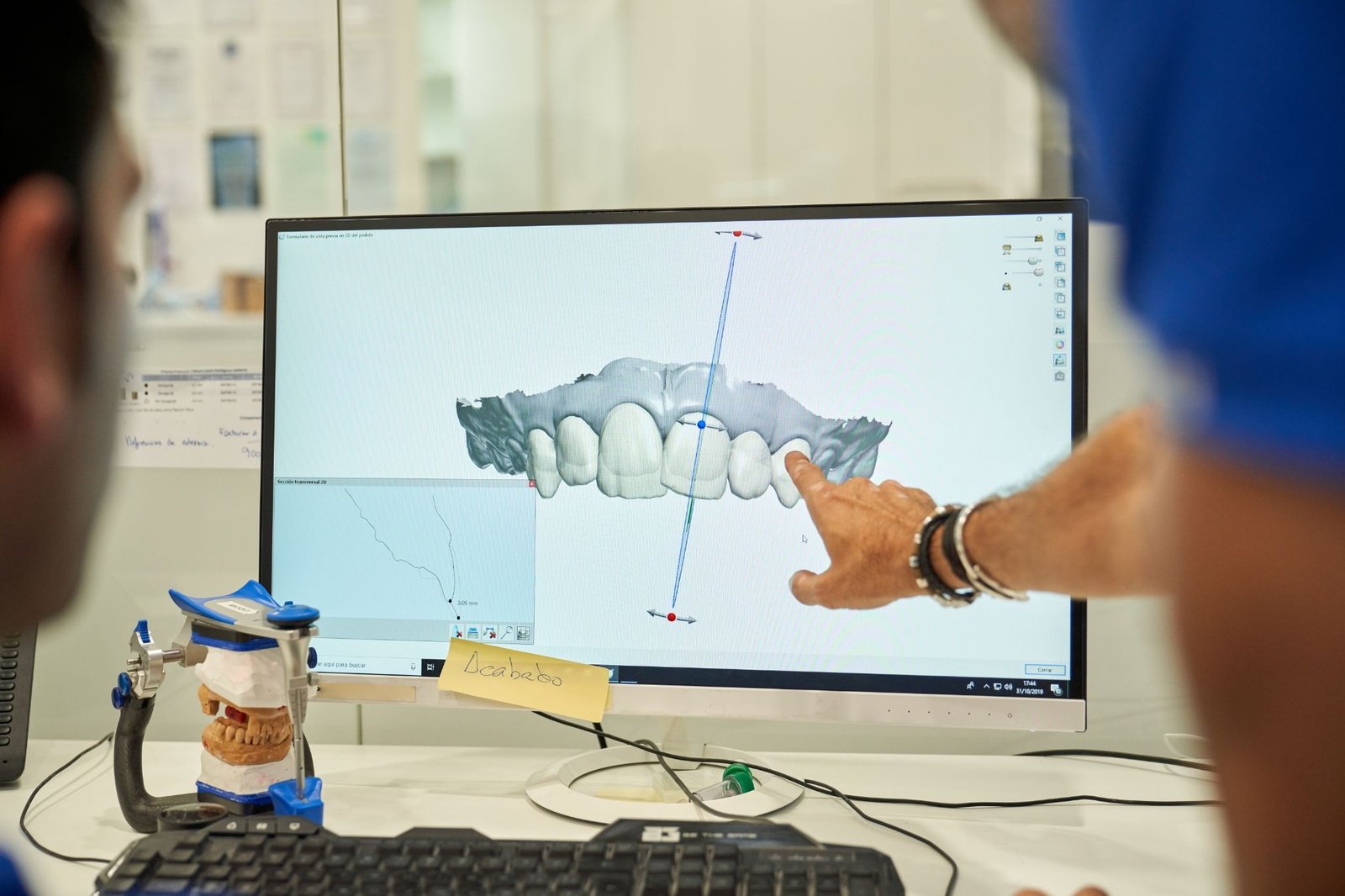
Digital treatment planning systems rely on advanced imaging technology. Orthodontists use intraoral scanners and CBCT imaging to capture highly detailed digital models of your mouth. These tools create a perfect virtual replica of your teeth and bite. Specialised software then simulates step-by-step tooth movement, calculating how your smile should change over time.
How Traditional (Physical) Orthodontic Planning Works
Before digital tools became standard, orthodontists relied on physical impressions made from gooey putty. They took manual measurements and based treatment plans entirely on their clinical experience. This physical approach offers limited visualisation of the final outcome before treatment begins. Instead, the process depends heavily on periodic adjustments and seeing how the teeth respond in the real world.
Key Differences Between Digital and Physical Planning
Visualisation of Final Outcome
Digital planning provides a 3D simulation of your predicted final smile right at the start. Physical planning offers no complete visual reference until your treatment is well underway.
Precision and Control
A digital approach allows the orthodontist to programme controlled, incremental movements for every stage of your treatment. Traditional methods require manual adjustments based on your physical progress during clinic visits.
Treatment Predictability
Digital systems pre-plan every tooth movement stage by stage. Physical planning takes a more reactive approach, adapting to how your teeth shift month by month.
Patient Understanding and Engagement
Patients can see their expected digital outcome upfront. This makes the process much easier to understand. Physical planning relies almost entirely on verbal explanations and trusting the doctor’s vision.
How 3D Planning Predicts Tooth Movement
Digital planning uses algorithms to calculate the exact force, direction, and sequencing needed to shift each tooth. The software simulates biological responses based on massive datasets of previous orthodontic cases. Orthodontists can then build refinement stages into the plan before treatment starts.
What Research Says About 3D Orthodontic Planning Accuracy
Systematic reviews show that 3D digital orthodontic planning improves treatment predictability compared to traditional methods, especially in treatment planning and sequencing.
However, studies also highlight that the final clinical result does not always match the original digital simulation exactly.
Clear aligner research indicates that simpler movements, such as alignment and tipping, tend to be more predictable, while complex movements like rotations, root control, and vertical adjustments show greater variation between planned and achieved outcomes.
As a result, refinement stages are commonly required to reach the final desired result, reflecting natural biological variation and patient compliance during treatment.
Overall, 3D planning is best understood as a predictive planning tool rather than a guaranteed outcome system.
These findings are supported by systematic reviews on digital orthodontic planning and clear aligner predictability.
Clear aligner predictability systematic review
How Accurate Are Digital Smile Simulations?
Digital simulations show high accuracy in mild to moderate cases. However, human biology is mnot a computer programme. The planned outcome on a screen often differs slightly from the final achieved result. Most patients will require refinement trays or minor physical adjustments to achieve a perfect finish.
Factors That Affect Whether Predictions Match Reality
Several factors determine if your teeth will follow the digital map:
- Patient compliance: You must wear your aligners or rubber bands exactly as directed.
- Case complexity: Severe crowding, bite corrections, and tooth rotations are harder to predict.
- Biological variability: Everyone has different bone density, which changes tooth movement speed.
- Clinical expertise: The quality of the initial digital setup depends heavily on the orthodontist’s skill.
Benefits of 3D Digital Planning
3D planning vastly improves treatment visualisation. It allows for highly predictable staging of tooth movement and helps doctors identify complex mechanical issues early. This leads to better communication between patient and orthodontist, drastically reducing the need for trial-and-error adjustments.
Limitations of Digital-Only Predictions
Digital software cannot fully simulate your unique biological response. There is a risk of overconfidence when patients see a “perfect outcome” visualised on a screen. Clinical monitoring remains essential, as patients sometimes misunderstand these simulations as guaranteed results rather than educated estimates.
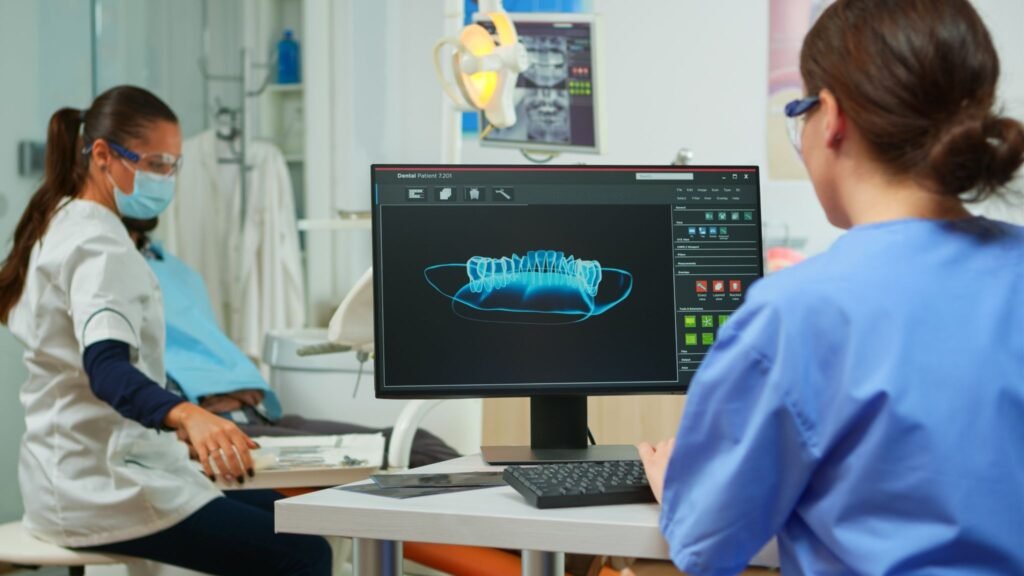
Image alt text: Orthodontic consultation using 3D dental imaging software to review digital teeth alignment and smile treatment planning.
Digital vs Physical Planning: Which Is Better?
Digital planning brings unmatched precision, visual clarity, and efficiency to orthodontics. Physical planning brings crucial adaptability and clinical judgement. Ultimately, the most successful approach is a hybrid one that combines digital foresight with physical, hands-on expertise.
What Patients Should Understand Before Starting Treatment
A 3D simulation is a helpful guide, not a strict guarantee. Your final results depend heavily on your compliance and your doctor’s supervision. Software is incredibly smart, but an orthodontist’s expertise is still the most important factor in your care. Expect your treatment plan to evolve as your teeth respond in the real world.
Future of Orthodontic Planning
The future of orthodontics will feature even more AI-assisted treatment simulations. We will soon see real-time progress tracking with digital feedback loops, allowing aligners to adapt instantly to changes. Predictive modelling will become deeply integrated with individual biological data to create near-perfect treatment plans.
Conclusion
3D planning has completely transformed how we predict tooth movement. It improves predictability and keeps patients engaged. However, it does not replace clinical reality. Achieving a beautiful, healthy smile requires a perfect balance of advanced digital technology, physical clinical expertise, and strong patient discipline.

 By
By




 By
By